
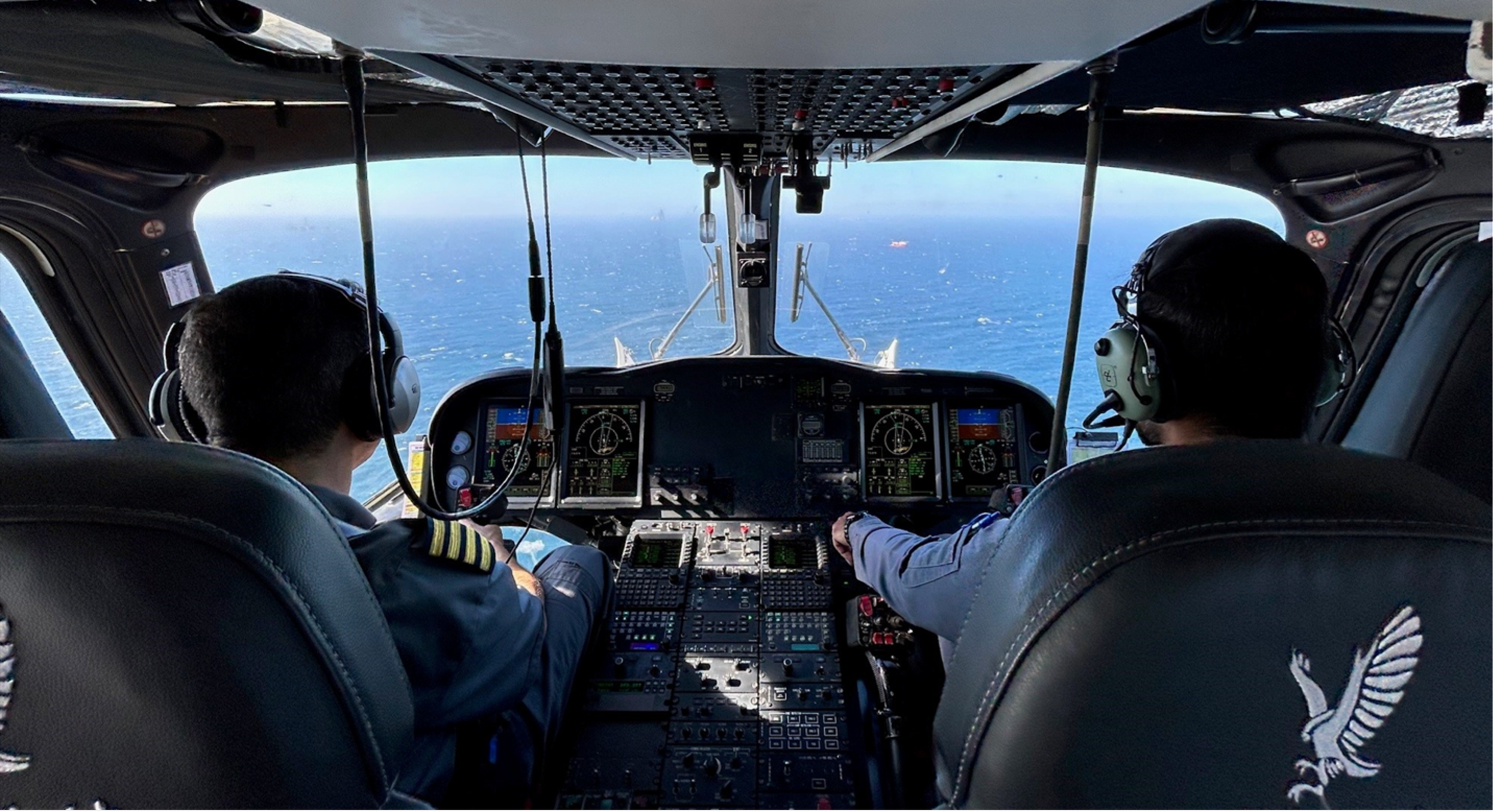
FLIGHT OPERATIONS OBSERVATION PROGRAMME RECOMMENDED PRACTICE
“Strengthening our understanding of how operations are conducted in real-world conditions is key to improving safety. This Recommended Practice will help our members to apply flight observation programmes in a consistent and practical way, ensuring that insights from everyday operations are used to enhance safety and performance across the industry.”
— Jim Evans, HeliOffshore Operations Director
Observation-based safety programmes have been widely used in other aviation sectors to provide insight into how crews manage threats and errors during normal operations, and identify safety risks and opportunities for improvement. However, their application in offshore helicopter operations presents unique challenges, including aircraft size, payload constraints and operational complexity.
The Flight Operations Observation (FOOP) Recommended Practice sets out clear, practical advice to support the implementation of Flight Operations Observation Programmes as a safety tool tailored specifically to offshore helicopter operations. It outlines how operators can use both in-person and camera-based observation methods to capture meaningful safety data and translate this into improvements in procedures, training, and operational performance.
The paper sets out:
The role of FOOP as a proactive, data-driven safety initiative based on observing real-world operations.
Guidance on implementing FOOP, with the recommended characteristics and workflow for both LOSA (in-person) programmes and Cockpit Camera Observation methods in offshore environments
Operational considerations, including selecting a FOOP Observer Team, Observer training, and data governance.
Key principles for ensuring effective, non-punitive, and confidential data collection.
Integration with existing safety systems such as SMS and Flight Data Monitoring (FDM).
Implementation challenges and success factors, including management commitment and workforce engagement.